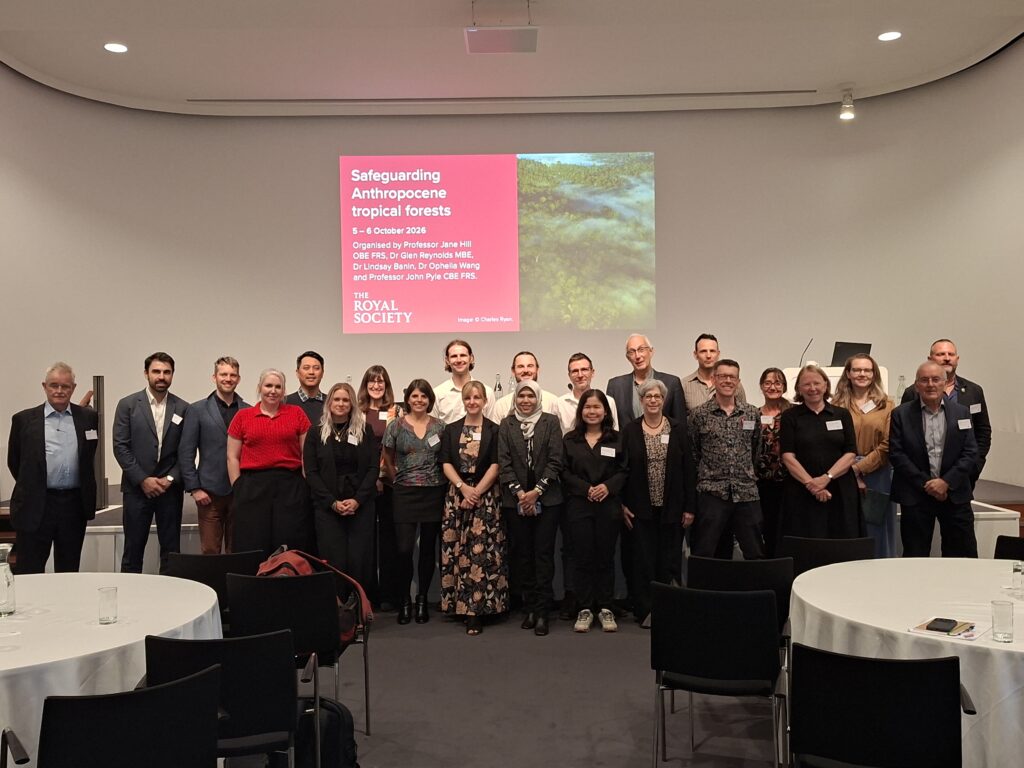
Organisers, Speakers & Panelists
5–6 October 2026 | London, UK
On 5–6 October 2026, scientists, conservation practitioners, policymakers and representatives from the green finance sector gathered at the Royal Society in London for a two-day scientific discussion meeting, “Safeguarding Anthropocene Tropical Forests.”
Organised by Professor Jane Hill, Dr Glen Reynolds, Dr Lindsay Banin, Dr Ophelia Wang and Professor John Pyle, the meeting explored how scientific research can help safeguard tropical forests in an era of accelerating environmental change, with a particular focus on the opportunities and challenges presented by emerging green finance mechanisms.
The meeting brought together international expertise across four interconnected themes over four sessions: the current state of play, deploying green finance, forest restoration and the way forward.
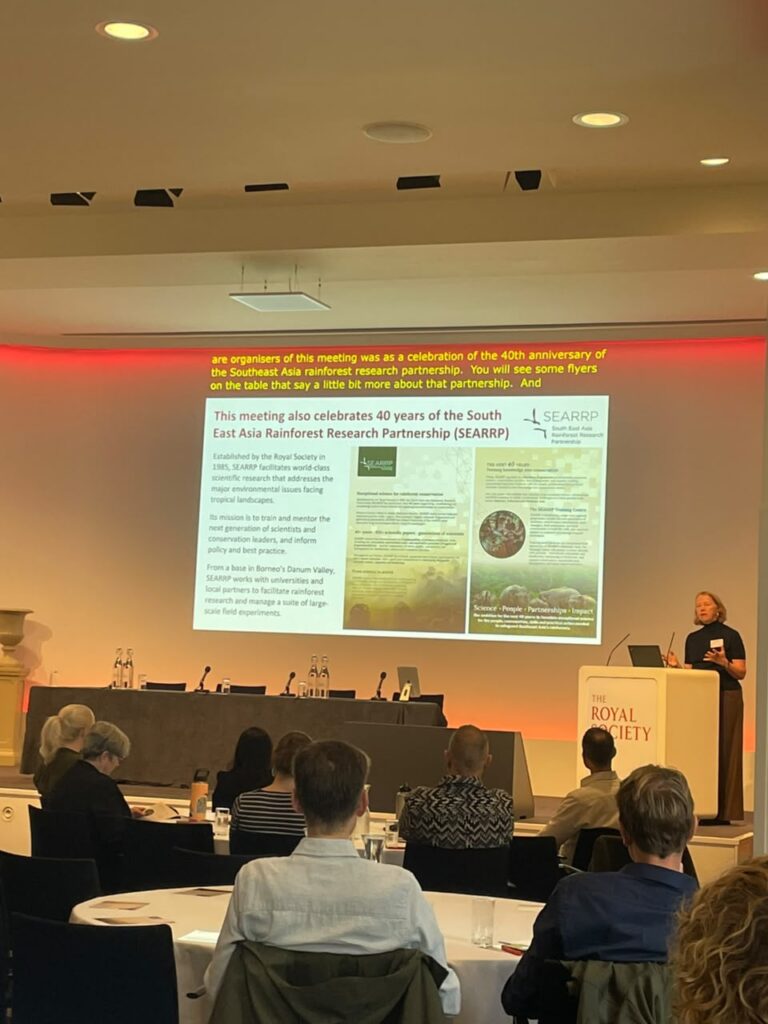
Warm welcome & introduction to the meeting from Prof Jane Hill
Session 1: Current State of Play
Chaired by Professor Jadedah Brodie, the opening session examined the current condition of tropical forests and the growing pressures they face. Presentations explored the ecological complexity of tropical forests, the impacts of fragmentation and human disturbance, and the importance of understanding biodiversity, carbon storage and ecosystem resilience. Speakers also considered how emerging technologies, including remote sensing and AI, can improve our ability to monitor forest ecosystems and assess conservation outcomes. Together, the talks highlighted the importance of strong scientific evidence in understanding how tropical forests are changing and identifying effective approaches to their protection.
Session 2: Deploying Green Finance
Chaired by Professor Julia Touza-Montero, the second session focused on the rapidly expanding role of green finance in tropical forest conservation. Speakers examined the opportunities and challenges associated with biodiversity credits, carbon markets, natural capital valuation and performance-based conservation financing. Discussions considered how financial mechanisms can be designed to deliver measurable environmental benefits while supporting local communities and ensuring credibility, transparency and accountability. A central theme was the need to connect financial investment with robust scientific monitoring, ensuring that conservation outcomes are both meaningful and verifiable.
Session 3: Forest Restoration
The second day opened with a session on forest restoration, chaired by Dr Matthew Struebig. Presentations looked at the potential for tropical forests to recover following disturbance, including the ecological processes that underpin natural regeneration and the role of active restoration. Speakers highlighted the importance of understanding forest recovery across different landscapes, from degraded and logged forests to regenerating ecosystems, and the opportunities offered by new approaches to monitoring biodiversity and carbon recovery. The session reinforced the importance of long-term research in identifying effective restoration strategies and understanding how recovering forests contribute to biodiversity conservation and climate mitigation.
Session 4: Ways Forward
Chaired by Dr Jennifer Lucey, the final session brought together the meeting’s key themes to consider how research, conservation policy and green finance can work more effectively together. Discussions were centred around practical approaches to monitoring tropical biodiversity, the importance of credible evidence in guiding conservation investment, and the need for stronger connections between researchers, policymakers, financial institutions and local stakeholders. The session emphasised the importance of translating scientific understanding into practical conservation action, while recognising the ecological and social complexities of tropical forest landscapes.
Bringing Ideas Together: Campfire Discussions and Final Panel
Beyond the formal presentations, the meeting created valuable opportunities for more open discussion and collaboration. At the end of the first day, participants joined the Campfire breakout discussion session, providing an informal setting to exchange ideas, explore emerging challenges and brainstorm potential solutions across the meeting’s themes.
The second day concluded with a panel discussion bringing together perspectives from conservation science, biodiversity monitoring and green finance. The discussion provided an opportunity to reflect on the key issues raised throughout the meeting and consider how scientific evidence can better inform conservation investment and decision-making.
Both of these sessions prompted a lot of really interesting discussions and highlighted the value of bringing together expertise from across disciplines and sectors.
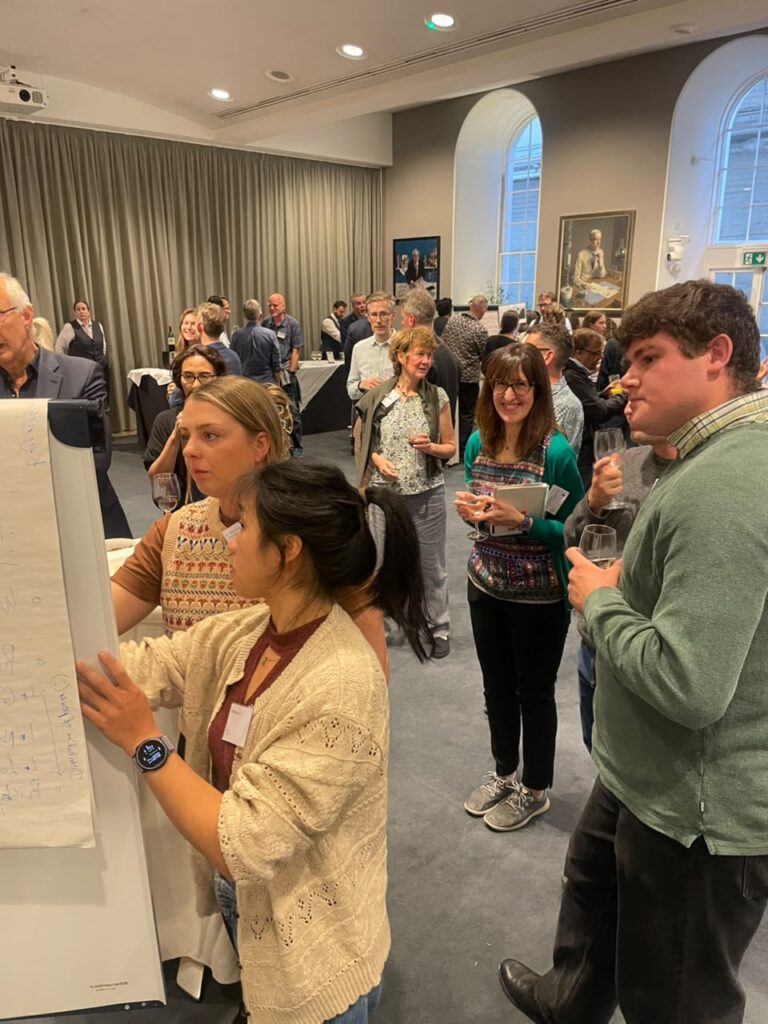
Campfire Session – Breakout Groups after Day 1 talks
Looking Ahead: From Discussion to Action
An important ambition of the meeting was to ensure that the conversations and collaborations extend beyond the two days at the Royal Society. A key planned outcome is a dedicated issue of the Royal Society’s scientific journal, Philosophical Transactions of the Royal Society B: Biological Sciences, bringing together research and perspectives arising from the meeting. The publication will provide an opportunity to further develop the scientific discussions and share findings with the wider research and conservation community.
SEARRP and the Royal Society: From 1985 to Today: SEARRP and the Royal Society
Established by the Royal Society in 1985, SEARRP has spent more than four decades facilitating scientific research addressing some of the major environmental challenges facing tropical forests, including habitat degradation, restoration and climate change. The meeting was a valuable opportunity to reconnect with our roots at the Royal Society, while exploring issues that remain central to SEARRP’s work today. It also highlighted the importance of long-term research and international collaboration in translating scientific knowledge into practical approaches to forest conservation, restoration and emerging green finance initiatives.
SEARRP would like to thank the Royal Society, the meeting organisers, session chairs, speakers and all participants for contributing to two days of stimulating and productive discussions.
