Author: Katie King

New Publication in Science : Active restoration accelerates the carbon recovery of human-modified tropical forests

New research demonstrates reforestation benefits.

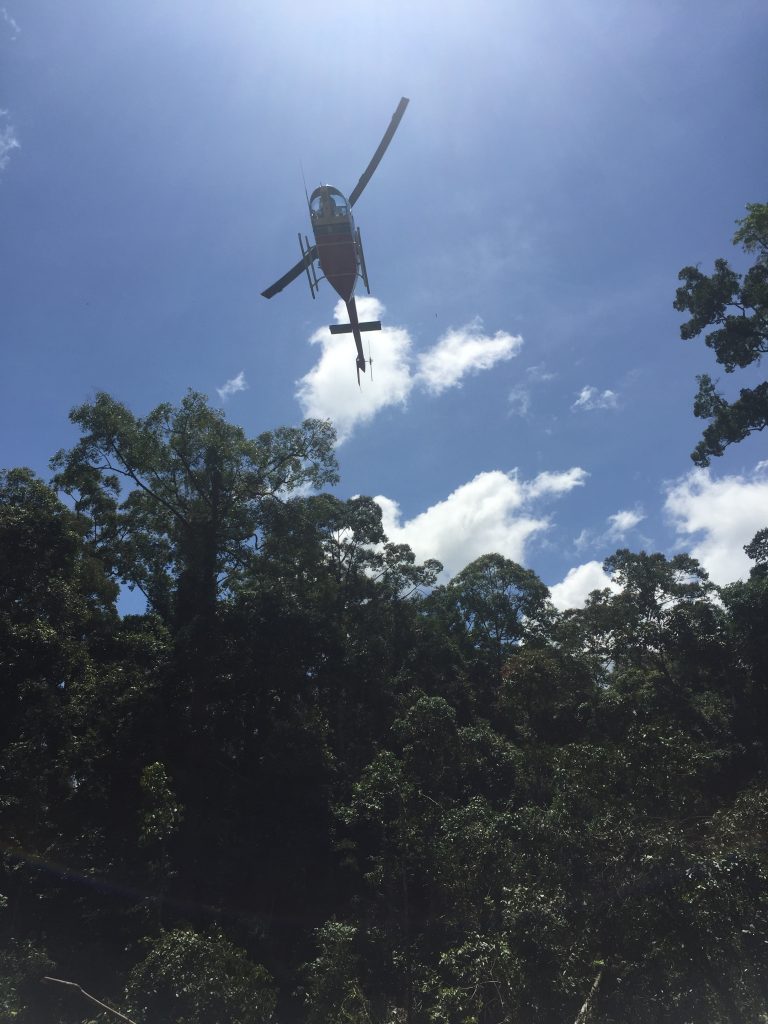
Fieldwork involved expeditions to remote forest locations (Photo credit: Christopher Philipson, ETH Zürich)

Researchers from 13 institutions studied an area of tropical forest in Sabah, Malaysian Borneo, that was heavily logged in the 1980s and subsequently protected from further logging or conversion to plantation agriculture.

They found that areas left to regenerate naturally recovered by as much as 2.9 Tonnes of aboveground carbon per hectare of forest each year. This is important because it highlights that if degraded tropical forests are protected they can recover well naturally. Even more importantly they found that areas of forest that underwent active restoration (primarily by ‘enrichment planting’ tree seedlings in the most degraded areas) recovered 50% faster, from 2.9 to 4.4 Tonnes of aboveground carbon per hectare per year.

The research, published today in Science, has its origins in work that Dundee’s Professor Mark Cutler and researchers now at Nottingham University carried out in Borneo almost 25 years ago. He led the project alongside colleagues at the University of Aberdeen, and ETH Zürich’s Department of Environmental Systems Science with the support of the SE Asia Rainforest Research Partnership (SEARRP).

Commercial selective logging in Sabah has been ongoing for decades and this has severely degraded large areas of the forest estate. While Sabah retains over 50% natural forest cover (with almost half this, ~25% of land area, being fully protected) relatively little of this forest is in pristine condition. Restoration, particularly in heavily logged lowland forests, is therefore essential if the biodiversity, carbon sequestration, other ecosystem services and livelihoods which these forests support are to be maintained.

Dr Christopher Philipson, first author of the paper who carried out the work at Dundee and the ETH Zurich, said, “The people of Sabah made this project successful, and I am looking forward to seeing more projects like this that promote outcomes for restoring and ultimately better protecting tropical forests.”

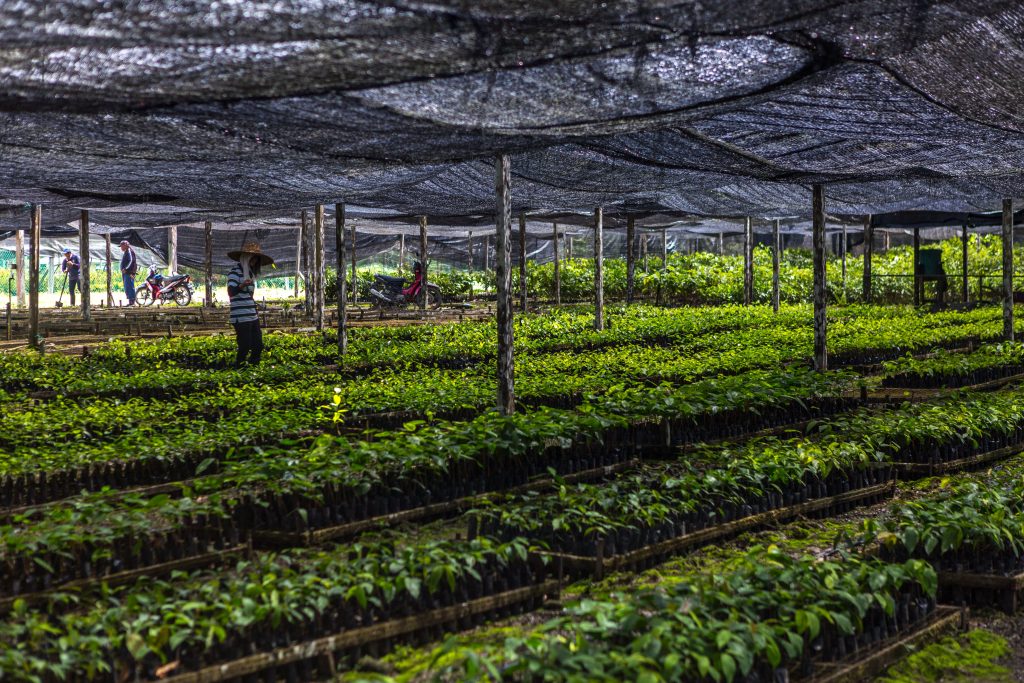
Restoration work needs investment into nurseries for seedlings of many different species. (Photo Credit: SEARRP Sonny Royal)

Restoration involves cutting lianas – plants which thrive in degraded forest and which impact the recruitment of tree seedlings and their survival and growth – weeding, and planting of seedlings to help the forest recover after logging. In areas where this doesn’t take place, the forest regenerates naturally.

“The increase in forest regrowth from restoration coupled with average global restoration costs, suggests carbon prices need to be higher to incentivise investment in restoration,” said Professor Cutler.  “Even so, protecting previously logged tropical forests from further degradation and certainly clearance is vitally important to reduce carbon emissions and conserve biodiversity, and so sustainable mechanisms for funding this must be found.”

This is the first time that a long time-series dataset has been used to demonstrate that active restoration helps the regeneration of forests after logging and other disturbances. However, the current carbon price isn’t sufficient to pay for cost of restoration, limiting the impact that can have on the climate change crisis. Logged areas are also more at risk of being cleared for agricultural purposes.

Professor David Burslem, of the University of Aberdeen, said, “We have long known that tropical forests have the capacity to recover from logging if left undisturbed for long enough, but the extent of the reduction in recovery time resulting from simple low-tech restoration techniques was a surprise. This knowledge was only achieved by a sustained investment in research by a multi-national team over more than 20 years. ”

Dr Glen Reynolds of SEARRP said, “This work underscores the crucial importance of long-term, coordinated field research which actively involves local scientists and organisations. The collaborative approach adopted by this team will provide clear routes to impact with respect to policy and best practice, and lead to better managed, protected and restored rainforests”.

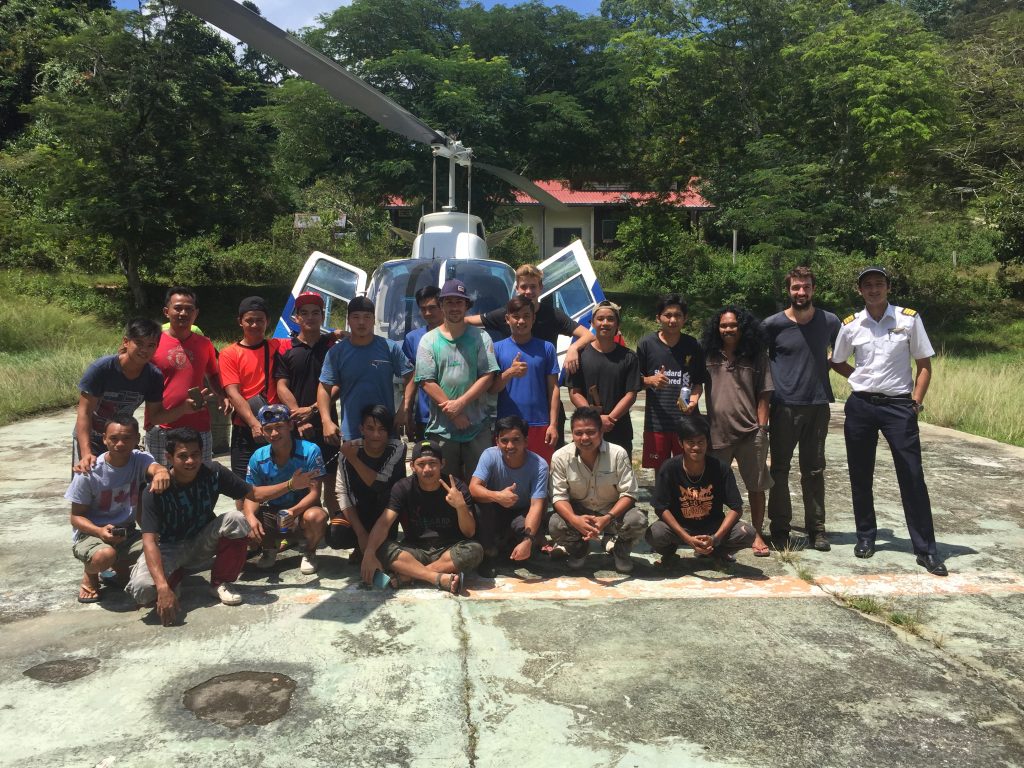
The SEARRP research staff and the most incredible helicopter pilot Jamahl Mannan, made this work possible (Photo Credit 13. Christopher Philipson, ETH Zürich)

This research was funded by the Carnegie Trust and the Natural Environment Research Council (NERC).

* PRESS RELEASE FROM THE UNIVERSITY OF DUNDEE *

SEARRP launches 3 year capacity building project with Yayasan Hasanah in the Central Forest Spine in Peninsular Malaysia.

The Central Forest Spine (CFS) is one of the most important conservation initiatives currently taking place in Malaysia. In 2010, the Federal Government of Malaysia launched the CFS Ecological Corridor Master Plan which outlines conservation strategies for the CFS, including the protection and connectivity of the remaining rainforests of Peninsular Malaysia. However, the issue of competing land use is constantly growing, particularly in ecological network areas, and this ongoing situation threatens wildlife habitats and affects the ecological integrity and ecosystem services provided by the Central Forest Spine.
In partnership with the Forestry Department of Peninsular Malaysia (FDPM), SEARRP has launched a three-year project funded by Yayasan Hasanah to build the capacity of FDPM, State Forestry Departments, other partner agencies, Civil Society Organisations, and stakeholders in the CFS, in order to identify and assess key ecosystem services across the CFS using the Toolkit for Ecosystem Services Site-based Assessment (TESSA). SEARRP is excited to be part of this incredible initiative and looks forward to working with partners in Peninsular Malaysia.  Learn more about this project here.
Yayasan Hasanah Project Meeting

Central Forest Spine Stakeholder Meeting

Important Notice: New Procedures for Arranging Field Work

Given the ongoing Covid-19 related restrictions in Sabah, which have particularly impacted fieldwork by overseas scientists, we have been forced to furlough and place on unpaid leave a large number of Research Assistants. During this period, while we are operating with a much-reduced team, it will be essential that any fieldwork that can take place remotely is efficiently coordinated. For any scientists who are in a position to initiate fieldwork, please contact SEARRP’s Operations Manager, Adrian Karolus and Assistant Director for Science Coordination, Dr Mikey O’Brien who will be able to make the necessary arrangements. Thanks for your understanding.

Covid-19

In light of the Covid-19 pandemic, and recently enacted Malaysian Government directives, we are suspending SEARRP operations – both field and office based – until further notice.
We have contacted SaBC and have been assured that, for scientists with pending applications, access permit dates will be amended to accommodate the revised schedules of visiting scientists. For further information – and to advise SaBC of field-work plans – please contact Alessandra Markos at SabC (alessandra.markos@sabah.gov.my). Although the SaBC office will be closed until the 31st March at the earliest, Alessandra will be working from home and will do her best to respond to emails in as timely a fashion as possible.
We have also been assured by Yayasan Sabah that similar flexibility will apply to research applications to the Danum Valley and Maliau Basin Management Committees.
If you have any other concerns, please contact either the SEARRP Director, Glen Reynolds (glen.searrp@icloud.com) or Co-Director, Agnes Agama (agnesagama@searrp.org).

OECM Inception Workshop in Kuala Lumpur March 3rd, 2020.

Dr Agnes Agama and Melissa Payne hosted a recognising and reporting OECMs in Malaysia Inception Workshop in KL on March 3rd, 2020. The workshop aimed to develop a consensus on the criteria and methodology for site-based assessments, using the IUCN WCPA guidelines and tools as a basis for the assessments. In addition, Agnes and Melissa will use this opportunity to shortlist potential OECM project case studies that were submitted to SEARRP in February 2020, and once chosen these case studies will be taken forward to the site-based assessment stage of the project.  SEARRP received over 40 applications of potential case studies from across Malaysia and together with the Advisory Group, they will review the different cases studies and analyse input from members on which sites should be shortlisted for the project.  This is an exciting stage of the OECM project, which is investigating the potential of conserving important and vulnerable ecosystems outside of protected areas in Malaysia. To learn more about this interesting project please visit our website. 

Dr Agnes Agama, SEARRP’s Co-Director, presenting in KL on potential case studies for the OECM project.

Reminder: Applications to Submit Case Studies for “Other Effective area-based Conservation Measures” (OECMs) are still open!

SEARRP is welcoming all interested parties to submit case studies of potential OECMs across marine, coastal, freshwater and terrestrial environments in Malaysia. Application forms are available for download in English and Bahasa Malaysia on the project webpage. A summary of the OECM criteria and IUCN OECM Guidelines is available on the project webpage, please read it through it, and ask any questions you might have, before submitting your application. Once you have completed the application form, please submit by email to melissa@searrp.org 
Deadline for submissions is 5pm on the 31st January 2020. 

Applications are now open! Call for case studies of potential OECMs in Malaysia!

SEARRP would like to invite all interested partners to submit case studies of potential Other Area-based Conservation Measures (OECMs) across marine, coastal, freshwater and terrestrial environments in Malaysia. The submission form is now available on our website and applications are in your choice of English or Bahasa Malaysia. The website gives a full overview of the scope of the project and details the criteria for applying for a potential OECMs. All submissions are completely voluntary and everyone is welcome to submit as many case studies as they would like, but please use one form per case study. The deadline for submissions is 5pm on the 31st of January 2020 and once completed all applications can be sent to SEARRP’s Science Impact Coordinator Melissa Payne. 

OECMs achieve the in-situ conservation of important and vulnerable ecosystems outside of Protected Areas

SEARRP awarded a new grant from the GEF Small Grants Programme in Malaysia!

SEARRP is thrilled to announce that we have been awarded a new grant from the GEF Small Grants Programme in Malaysia! Over the next two-years, we will be working with a range of partners and stakeholders in to investigate how “other effective area-based conservation measures” (OECMs) can conserve biodiversity that occurs outside of Malaysia’s protected area systems. We are very much looking forward to discovering marine and terrestrial OECMs across Malaysia and exploring how these sites can be recognised and reported. Read more about this project here.

SEARRP is investigating the potential for “other effective area-based conservation measures” (OECMs) to conserve important and vulnerable ecosystems outside of protected areas in Malaysia. Photo Credit @Chien Lee


SEARRP launches it’s new quarterly newsletter

Welcome to the first in a series of quarterly newsletters!!

At SEARRP we are continually looking to increase the scope, scale and impact of the organisation and over the next few months we look forward to outlining some exciting new initiatives, partnerships and opportunities – not just for science, but also training, capacity building and outreach – so do please keep an eye out for future newsletters.  Click here to read the full newsletter, and be sure to keep an eye out for our next one!

Staring and climbing into the canopy of these magnificent trees in Danum Valley has led us to climbing the tallest tree in the tropics–read the whole story in the newest edition of the SEARRP newsletter